

Why Do Some Foods Stain Your Teeth?
Many foods and beverages we consume daily contain chemicals, natural or artificial pigments, tannins, and acids that can progressively damage tooth enamel. These foods that stain your teeth not only affect the color of our smile but can also indicate enamel wear that compromises long-term oral health. Understanding how and why these foods have this effect allows us to adopt preventive measures, either by reducing their consumption or combining them with appropriate oral hygiene practices. This is a fundamental step if you have invested in treatments such as teeth whitening or dental aesthetics.
What Foods Stain Your Teeth, and Why Is It Important to Know Them?
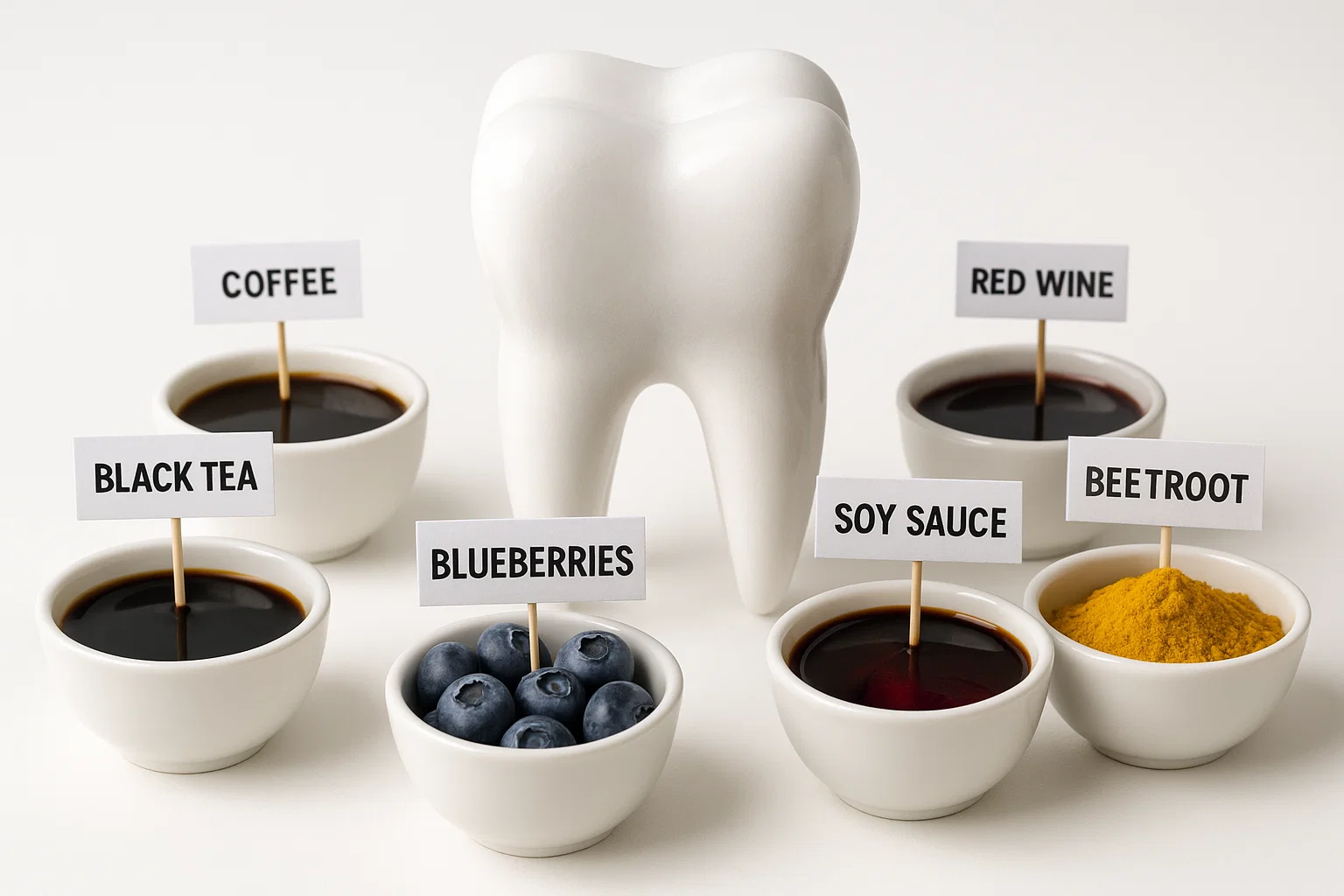
- Coffee. Coffee is one of the main culprits of dental stains. It contains chromogens, which are compounds with dark pigments capable of easily adhering to the enamel. In addition, its acidity can weaken the dental surface, making it easier for coloring particles to penetrate further. If you consume coffee daily, it is advisable to drink it with a straw or accompany it with a glass of water to minimize its impact.
- Red wine. Red wine is a beverage with multiple antioxidant benefits but also with a strong coloring power. Its tannins and acidity work together to erode the enamel and allow dark pigments to penetrate deeply into the teeth. Interestingly, white wine, although it does not stain directly, can weaken the enamel and leave it more vulnerable to stains from other foods or beverages. If you like wine, you can minimize its impact by alternating with water and taking care of your dental hygiene after consumption. This is especially important if you have treatments such as dental implants in Malaga or aesthetic crowns, as the color difference between the pieces can become noticeable.
- Dark sauces. Sauces with intense pigments such as soy sauce, balsamic vinegar, barbecue sauce, or even tomato sauce are on the list of foods that stain teeth due to their high concentration of dyes and their acidic nature. These sauces are common in many everyday meals, so their effect accumulates without us noticing. To reduce their impact, they can be consumed in moderation or combined with other more neutral foods, such as white rice or light-colored vegetables, which balance the pigmentation.
- Curry and intensely colored spices. Curry, turmeric, paprika, and other spices with vibrant colors can easily adhere to the teeth, especially if the enamel is worn. Their staining effect is not immediate but progressive. In cultures where these spices are used daily, it is common to see yellowish stains that can only be removed with professional treatments. To minimize their impact, you can accompany them with dairy products such as yogurt or rinse your mouth after meals.
- Beetroot (beet). Beetroot is a superfood for its antioxidant properties and its richness in iron, but it is also one of the vegetables with the greatest capacity to dye surfaces, including teeth. Its natural pigment is so intense that it can even temporarily dye the tongue or gums. When consuming it, especially in juices or smoothies, it is important to rinse the mouth or brush your teeth shortly after to prevent the pigment from attaching to the enamel.
- Candies and sweets with artificial colors. Sweets, chewing gum, and candies with artificial colors such as blue, red, or purple are especially problematic in children, although they also affect adults. These colorants not only fix temporarily, but if consumed frequently, they can leave lasting stains. In addition, their high sugar content aggravates the problem by encouraging the appearance of cavities, which further darkens the natural color of the tooth.
- Vinegar and pickles. Although they do not always contain intense colorants, very acidic foods such as vinegar, pickles, and other pickles contribute to the wear of tooth enamel. By weakening the surface of the teeth, these foods do not stain directly, but they make the enamel more vulnerable to other pigmenting agents. In addition, by altering the pH of the mouth, they can affect the oral flora and saliva production.
How to prevent stains on teeth?
Prevention is the best strategy to maintain a white and healthy smile. Some key habits include:
- Brushing your teeth at least twice a day, using fluoride toothpaste or with whitening action.
- Using dental floss to remove debris that accumulates between the teeth and that could contribute to the formation of stains.
- Avoiding mouthwashes with alcohol, as they dry out the mouth and can alter the bacterial balance.
- Drinking water after consuming pigmented foods or beverages to help naturally clean the dental surface.
- Visiting the dentist every six months for a professional cleaning and monitoring of any changes in dental coloration.
- Consulting about treatments such as invisible orthodontics in Malaga if you are looking to align your teeth and facilitate their daily hygiene.
What to do if I already have stains on my teeth?
The most recommended thing is to visit your dentist for an evaluation. Depending on the depth of the stain, they may suggest a professional cleaning or teeth whitening with safe and effective products.
Conclusion
Beyond avoiding foods that stain teeth, it is important to maintain a complete oral routine and go to the specialist regularly. If you already have stains, there are effective treatments such as deep cleanings, professional whitening, or aesthetic veneers. In addition, if there is a loss of dental pieces or significant deterioration, you can consider options such as dental implants in Malaga that, in addition to restoring functionality, improve the appearance of your smile. Remember that a white smile not only reflects beauty but also health.
For more tips on dental care, don’t miss our latest blog article on: How to remove tobacco stains on teeth