

Dental crowding is one of the most common dental malposition problems and, at the same time, one of the most impactful on aesthetics and oral health. It occurs when the teeth do not have enough space to align correctly in the dental arch, causing some to overlap, rotate, or shift out of their natural position.
This problem can appear in both children and adults, and although in many cases it has a genetic origin, it can also be influenced by oral habits or premature tooth loss. Understanding what dental crowding is, its causes, and the treatment options available is essential to prevent complications and maintain a healthy and harmonious smile.
What is dental crowding and why is it important to know?
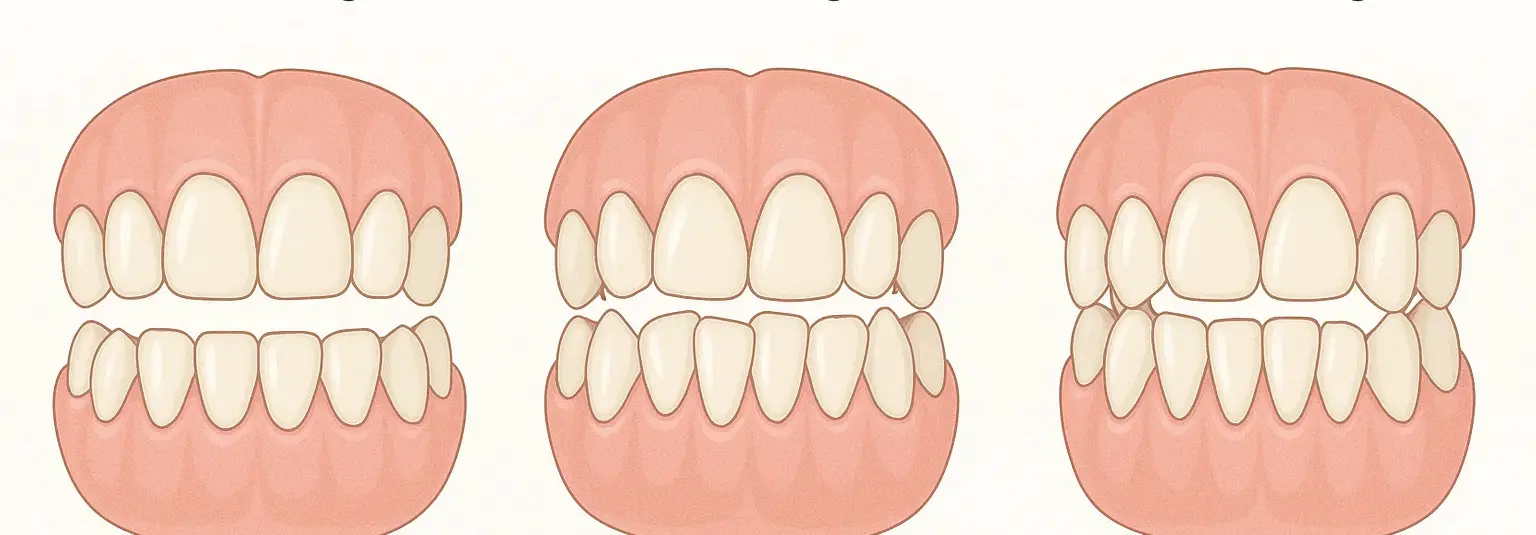
Dental crowding is a type of malocclusion characterized by a lack of space in the jaw or maxilla for all teeth to fit in an aligned manner. As a result, some teeth overlap, rotate, or are even displaced forward or backward.
This problem not only affects dental aesthetics, but also oral health, as it hinders hygiene, promotes the accumulation of bacterial plaque, and increases the risk of cavities and periodontal disease.
Causes of dental crowding
- Genetics: Inherited small jaws or teeth larger than average.
- Premature loss of deciduous teeth: When a baby tooth is lost too early, the space may close before the permanent tooth erupts.
- Prolonged oral habits: Thumb sucking, nail biting, or pushing the tongue against the teeth.
- Irregular jaw growth: Asymmetrical or insufficient bone development.
- Late eruption of permanent teeth: This can disrupt the alignment of the teeth already present.
What are the types of dental crowding?
- Mild: Small rotations or overlaps of teeth.
- Moderate: Greater displacement and rotation of several teeth.
- Severe: Noticeably crowded, rotated, or even out of the arch teeth.
How do I know if I have dental crowding?
- Crooked or crowded teeth.
- Non-existent or very small spaces between teeth.
- Difficulty using dental floss.
- Feeling that the teeth do not fit together correctly when biting.
- Early appearance of tartar or cavities in hard-to-clean areas.
Treatments for dental crowding
- Invisible orthodontics in Malaga: Removable transparent aligners that correct the position of the teeth discreetly and comfortably.
- Traditional or aesthetic brackets: Ideal for moderate and severe cases.
- Expansion of the dental arch: Frequent in young patients, to gain space without extractions.
- Selective dental extraction: When space is very limited and there is no other viable solution.
How long does dental crowding treatment last?
The treatment time can vary between 6 and 24 months, depending on the complexity of the case and the method chosen. Mild cases with invisible orthodontics can be resolved faster, while severe cases require more time and monitoring.
Can dental crowding be prevented?
- Dental check-ups from 6 years of age.
- Early correction of harmful oral habits.
- Interceptive treatments during growth.
- Maintain good oral hygiene and control of cavities.
Consequences of not treating dental crowding
- Greater risk of cavities and periodontal disease.
- Problems with the bite and pain in the temporomandibular joint.
- Uneven wear and dental fractures.
- Impact on self-esteem and the aesthetics of the smile.
Conclusion
Dental crowding is not only an aesthetic issue: it directly affects oral health. With early diagnosis and a personalized treatment plan, it is possible to correct it and prevent complications.
In our clinic, we offer solutions such as invisible orthodontics in Malaga, in addition to complementary treatments such as dental implants in Malaga to restore lost teeth and improve dental aesthetics. If you want to know more about post-orthodontic treatment care, visit our latest blog on “What are dental retainers?“.
Frequently Asked Questions
Can dental crowding cause headaches?
Yes, in severe cases it can cause tension in the jaw that leads to headaches.
Does dental crowding worsen with age?
Generally yes, as teeth tend to shift over time if alignment is not corrected.
Can I correct dental crowding without braces?
Yes, there are alternatives such as invisible orthodontics that allow teeth to be aligned without traditional braces.