

Mouth ulcers, known as canker sores or oral ulcers, are small lesions that appear on the oral mucosa, causing significant discomfort when speaking, eating, or drinking. Despite their frequent appearance, the causes of these sores are not always clear to those who suffer from them. This article from Mariana Arocha as a dental aesthetics clinic in Malaga, we will comprehensively address why mouth ulcers appear, how to recognize them, and what steps to take to prevent and treat them.
If you are interested in improving your smile or taking care of your oral health, we recommend learning about our teeth whitening Malaga service, an ideal option to achieve whiter and healthier teeth.
What are mouth ulcers and how to recognize them?
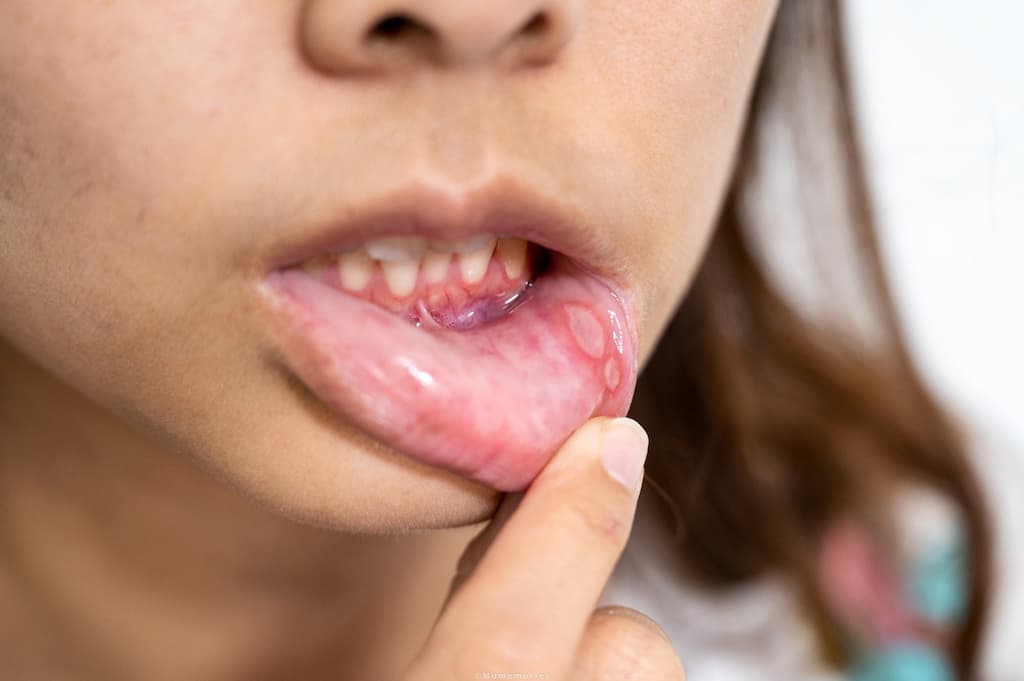
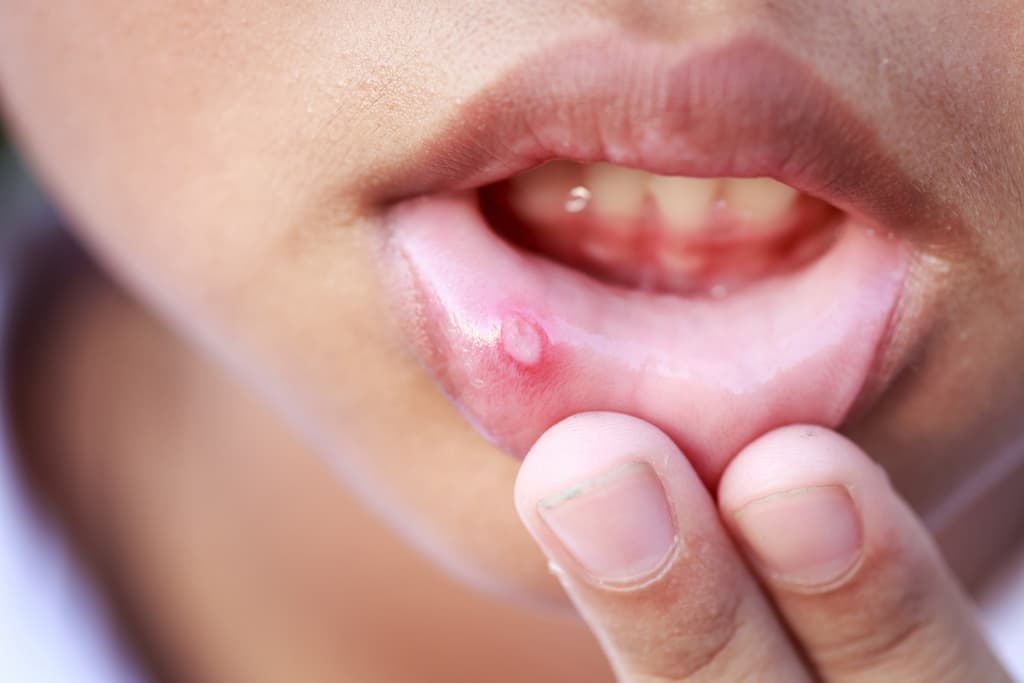
Mouth ulcers are superficial lesions that can occur in different areas of the oral cavity, such as the tongue, gums, the inside of the cheeks, and the palate. They are characterized by being small, rounded, and white or yellow in the center, surrounded by an inflamed reddish border.
Although not contagious, canker sores can be extremely painful, especially upon contact with acidic, spicy, or hot foods. Their duration varies between one and two weeks, depending on their severity and the measures taken to treat them.
Main causes of why mouth ulcers appear
Identifying the reasons behind their appearance is key to preventing these annoying lesions from becoming a recurring problem. Below, we explore the main causes:
Stress and hormonal changes
Stress is one of the most common factors that contribute to the formation of mouth ulcers. Daily tensions affect the immune system, making it more susceptible to the appearance of canker sores.
In the case of women, hormonal changes associated with the menstrual cycle or pregnancy can also trigger these lesions, due to alterations in the hormonal balance that influence the oral mucosa.
Physical injuries and diet
Small wounds in the mouth, such as those caused by accidentally biting the tongue or cheeks, often turn into ulcers. The use of poorly fitted dentures or orthodontic brackets can also irritate the oral mucosa and cause these ulcers. We remind you that at Mariana Arocha, we offer invisible orthodontics in Malaga.
On the other hand, diet is essential. Consuming very acidic, spicy, or hard foods, such as nuts and toast, can injure the oral tissue, increasing the risk of developing canker sores.
Genetic factors and systemic diseases
If you have family members who suffer from recurrent mouth ulcers, there may be a genetic predisposition. This factor combines with other triggers, such as stress or a poor diet, to increase the likelihood of appearance.
In addition, certain systemic diseases, such as Behçet’s syndrome, lupus, or celiac disease, may include mouth ulcers among their main symptoms. Nutritional deficiencies of iron, vitamin B12, and folic acid are also associated with a higher incidence of canker sores.
Are mouth ulcers dangerous?
In most cases, mouth ulcers are benign and disappear on their own. However, it is important to pay attention if:
- The canker sores are very large or recurrent.
- They persist for more than two weeks.
- They are accompanied by fever, diarrhea, or intense pain.
These signs may indicate more serious problems that require medical attention, such as infections or autoimmune diseases.
5 Home remedies for mouth ulcers
Prevention is the best strategy to maintain oral health and avoid these annoying lesions. Effective recommendations are presented below:
- Rinse with water and salt. This is one of the simplest and most effective remedies. You only need to dissolve a teaspoon of salt in a glass of warm water and rinse your mouth for about 30 seconds. You can repeat it two or three times a day. Salt helps disinfect the area and reduces inflammation.
- Honey. Apply a small amount of honey directly on the ulcer several times a day. Thanks to its antiseptic and healing properties, honey helps to soothe the pain and promote the recovery of damaged tissue.
- Chamomile. You can prepare a chamomile infusion, let it cool and use it as a mouthwash. Another option is to apply a wet chamomile bag directly on the ulcer. This plant has calming and anti-inflammatory properties that help reduce discomfort.
- Aloe vera. Aloe vera gel is excellent for treating oral wounds. Apply it with a swab directly on the ulcer several times a day. It has a regenerating effect that promotes healing and relieves irritation.
- Ice. If the ulcer is causing a lot of pain, you can apply an ice cube on it or let it melt slowly in your mouth. The cold numbs the area and helps reduce swelling and discomfort.
What vitamin is lacking when mouth ulcers appear?
The frequent appearance of ulcers or canker sores in the mouth may be related to the deficiency of certain vitamins, especially:
- Vitamin B12. Its deficiency can cause canker sores, fatigue, inflamed tongue, and a burning sensation in the mouth.
- Folic acid (Vitamin B9). It helps maintain the health of the mucous membranes; its deficit can cause oral ulcers.
- Vitamin B2 (riboflavin). Its lack is associated with cracks in the corners of the mouth and sores.
- Iron. Although it is not a vitamin, its deficiency can also cause canker sores and paleness in the oral mucosa.
If you have frequent canker sores, a blood test could reveal if you have any nutritional deficiencies.
How to know if it is a canker sore or an ulcer?
The difference between a canker sore and an ulcer can be confusing, since they are often used as synonyms. However, they are not exactly the same.
Canker sores are a specific type of ulcer. They appear as small round or oval ulcers, white or yellowish in color, surrounded by a reddish border. They appear exclusively inside the mouth, such as on the gums, tongue, or the inside of the lips and cheeks. They are not contagious, but they are very painful, especially when eating, talking, or brushing your teeth.
On the other hand, the term ulcer is broader and refers to any type of lesion in the oral mucosa. Ulcers can originate from various causes, such as burns, accidental bites, viral infections (such as herpes), dental appliances, or even from the canker sores themselves. Some ulcers, especially those caused by viruses, can be contagious.
Conclusion
Understanding the causes of why mouth ulcers appear and how to prevent them is the first step towards optimal oral health. Although these lesions are common and, in most cases, harmless, they should not be ignored if they affect your quality of life. By following good oral hygiene habits and adopting a proactive approach, you can significantly reduce the frequency of these discomforts.
Remember that, in matters of health, it is always better to prevent than to cure. If you experience recurrent or persistent ulcers, do not hesitate to seek professional help to identify the cause and find an appropriate solution.
If you liked this article, you will be interested in reading: “dental reconstruction”